

I’ve been thinking about writing and publishing in a language other than Arabic for some time now. Vicky’s comment on an article I published last November, titled “The Disappearance of the Self from Itself and the Encyclopedia of Istanbul,” reminded me of this intention. I was delighted when she read and commented on it after she translated it using machine translation! I believe I have something to say and share with non-Arabic readers, and this is an opportunity to thank them for their engagement with my writing, despite the language difference.
Today, I’m publishing my first article from the moon in English, and I will continue to publish one article in English monthly, while, of course, continuing to publish in my native language, Arabic.
I apologize in advance to those who won’t be able to read this article; I promise I’ll make it up to you.
For me, English was always linked to the learning environment in school, university, and work. Even when I learned it at 5 years old, I tried to use the language itself to read literature, stories, and articles or to write journals, but I failed. Language difficulties play no role in this failure; I listen to audiobooks and watch movies and TV shows without subtitles. But the emotional baggage, tiredness, stress, and exhaustion that accompany the learning process prevent me from using it in anything else. These feelings revisit me whenever I try to break its heavy power over me! So, I am performing a live experiment, hoping to overcome this heaviness and re-bond with it again.
After writing and publishing in Arabic here for seven years without interruption, I decided to post one blog a month in English until the end of the year- not a promise, but I will do my best to commit. This decision came after I watched an interview with the Turkish novelist and writer Elif Shafak. She said, “I started writing in English, which is my third language, after I published 4 novels in Turkish, because I wanted the freedom and the ability to zoom out to write and think from different perspectives”. She also said, “Writing about expressing emotions, feelings, sadness, sorrow, depression, and loneliness is easier for her in Turkish, while writing humor, sarcasm, irony, and satire is much easier when she writes in English”.
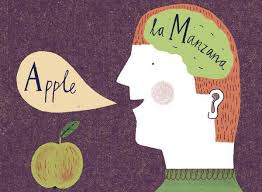
I wrote about this idea years ago in an article titled “By Multiple Tongues,” which I’ll try to summarize here. The ability to speak or write in several languages helps expand your mind and your thinking, and builds new connections between your neurons by activating different parts of your brain. It also plays a role in shaping your personal character, either by developing or acquiring certain traits and skills through language learning. Sometimes, the emotional distance from your native tongue also helps you express an idea more clearly, free from the complications or limitations imposed by your first language.
This point becomes especially noticeable with patterns that harm you or hold back your goals. In your native language, it can be hard to discuss or analyze thoughts and beliefs that are damaging to you — you tend to make excuses and avoid fixing them because of the emotional bonds tied to ideas, plans, work, parenting methods, or people. But when you change your environment, or you are pushed to learn a foreign language, you gain the courage to make real changes in your mind and life. Learning and thinking in a new language — a second or third one — makes your mind more flexible and better able to see things from different angles and perspectives. These are the thoughts I wrote about in “Multiple Tongues” back in 2020.
I was happy to hear a similar idea from Elif Shafak, and to hear about her experience writing and publishing in English (her third language, since Spanish is her second) and how positively this affected her creative work. Elif emphasized an important idea: “The more fluent you become in a language, the faster your brain will move ahead of your tongue when speaking it, and that gap never fully closes, so you shouldn’t be hard on yourself about it”.
I came to this thought through my daily, intensive use of the microscope, changing lenses, adjusting slides, using different staining techniques to help clarify the cells, and enjoying the fun of playing with magnification powers, with the skill to zoom in and out without even moving the stage. All of this gave me that tickle in my brain whenever I learned something new!
I noticed that this barrier with English only shows up around the specific skills I used while studying. It never stopped me from watching shows or movies, or listening to audiobooks. Even after finishing my PhD, I never really stopped studying or learning. I knew I had to break through this heaviness the way you rip off a bandage, fast, and all at once!
It took me two hours to write, polish, and review this article. I delayed my lunch to cut down the time, letting hunger work as motivation to get it done! Surprisingly, this is a habit I’ve had since high school! Back when I was preparing for exams or working through study materials. I’d pick a stack of pages and tell myself, “I won’t eat until I finish this,” and each time the stack grew bigger, I grew more tolerant of it. Now I’ve figured out how I stayed in shape! And this is living proof that using different languages helps you notice personal hidden spots that have been sitting right in front of your eyes your whole life.
I tried to keep my identity, own voice, and way of speaking and writing as much as possible!
Hope you enjoy it, and more to come.
Aeshah.





 عائشة على القمر
أضف تعليق